Lithuania is Making Bold Strides into the Space Sector
Lithuania’s innovation ecosystem is seeing rapid growth in the space sector, which is playing an increasingly significant role. Cutting-edge solutions developed in the country are attracting attention from the European Space Agency (ESA), opening new doors for Lithuanian businesses.
Through ESA programs, Blackswan Space has already secured over half a million euros in funding to develop vision-based navigation technology for satellites. A demonstration of this technology in Earth's orbit is expected by 2027.
“The potential of Lithuania’s space industry is truly significant. As the number of satellites in orbit grows, so does the need to tackle space debris challenges. Companies like Blackswan Space are bringing innovations that are transforming the space industry. This is why the technologies being developed by this Lithuanian startup have great prospects. ESA’s investment in their development, typically reserved for highly significant projects, confirms this,” says Eglė Elena Šataitė, head of the Space Hub LT group at the Innovation Agency Lithuania.
According to Šataitė, in order to capitalize on this potential and continue the sector’s growth, Lithuania needs sustained funding and international collaborations, which often serve as a launchpad for critical partnerships.
The Need for Long-Term Perspective
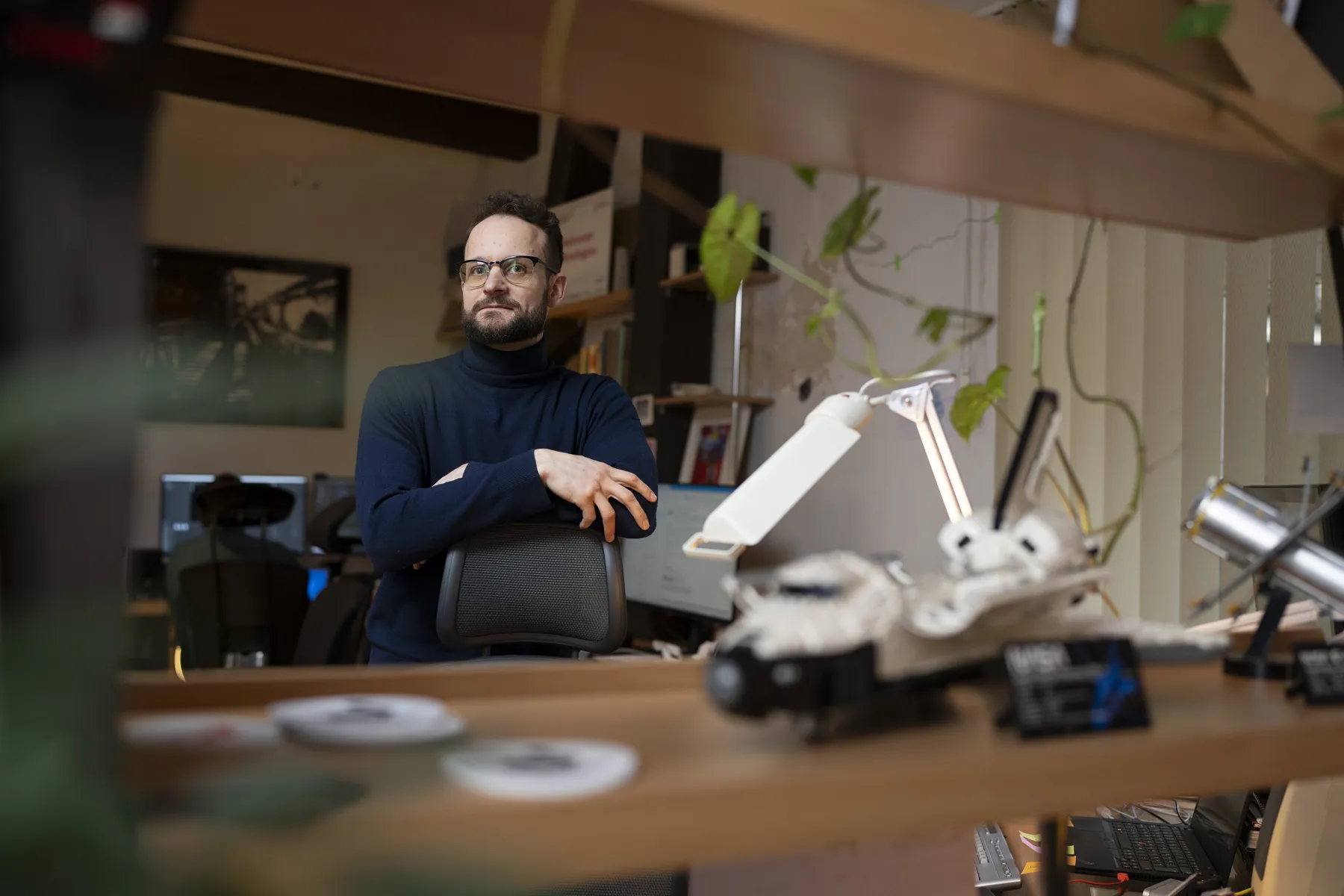
Ensuring consistent funding remains one of the biggest challenges for startups in the space industry, says Marius Klimavičius, founder and CEO of Blackswan Space.
In its early stages, the company benefited significantly from two support programs by Lithuania’s Innovation Agency – “Inostartas” and “Inočekiai” – which provided funding for research, experimental development, and related services.
“In later stages, collaboration with ESA and the funding secured through it became crucial. We signed our first contract with ESA in 2019, and today, we’ve lost count of how many contracts we have. However, we still have a long way to go before our solutions reach full commercialization. In the space sector, this is inevitable, and significant profits usually become realistic only after ten or more years. That’s why long-term perspective, consistent effort, and perseverance are essential in this field,” explains Klimavičius.
Developing Solutions for the Future of Space
Marius Klimavičius, who previously worked at ESA and Lithuania’s leading space company NanoAvionics, says he has been passionate about space since childhood.
This passion, combined with firsthand knowledge of the challenges in today’s space industry, led him to focus on developing autonomous satellite navigation systems.
“Our goal is to make satellites more autonomous, ensuring more efficient and safer operations while simplifying mission planning in increasingly congested orbits. Some estimates suggest that by 2030, there could be up to 100,000 satellites in Earth's orbit. This raises concerns about safe navigation and the increasing amount of space debris. Our solutions – based on visual data analysis and artificial intelligence – will help satellites avoid obstacles in space,” says Klimavičius.
Currently, the 10-person team at Blackswan Space is also working on satellite mission simulation software and robotics solutions for satellite servicing in orbit.
According to Klimavičius, over the next decade, the space industry will undergo major transformations due to the affordability of small satellites, lower launch costs, and rapid advancements in artificial intelligence. These changes will open up new opportunities for innovation.
To seize these opportunities and ensure Lithuania’s place in space, access to funding is critical. Klimavičius firmly believes that investments in the sector will yield significant returns by driving economic growth.
Lithuania became an associate member of the European Space Agency (ESA) in 2021.
Since then, Lithuanian research institutions and space-related businesses have been participating in international space programs. The goal is for the space sector to contribute 1% of Lithuania’s GDP by 2027.