The project “Implementation of Mission-Driven Science and Innovation Programmes” was created specifically to carry out these missions. As part of this initiative, representatives from science and business formed three consortia, each led by one of Lithuania’s leading universities. Together, they are working on three missions of major societal importance: “Innovations for Health,” “Safe and Inclusive e-Society,” and “Smart and Climate-Neutral Lithuania.”
The mission-driven science and innovation programmes were initiated by the Ministry of the Economy and Innovation together with the Ministry of Education, Science and Sport, while the Innovation Agency Lithuania is collaborating on programme implementation.
A total of €88.34 million has been allocated for this project: €76.69 million from the European Recovery and Resilience Facility and €11.65 million from the Lithuanian state budget.
Why Are Science and Business Seeking Solutions Together?
Complex treatment methods, cybersecurity threat prevention, and next-generation materials testing require significant scientific involvement – new discoveries and solutions emerge in researchers’ laboratories.
However, research alone is not enough to bring solutions to society. They must reach users in the form of a product: we need access to new medicines, software that protects our data from cyberattacks, next-generation road surfaces that not only reduce CO₂ emissions but also help save fuel. This is where business comes in – to ensure that laboratory breakthroughs capable of changing our daily lives do not remain on a shelf, but become accessible to everyone.
In this project, consortium members are developing innovative solutions and products based on advanced and essential scientific research. Three competence centres will also be established to strengthen the national innovation ecosystem and promote a high value-added economy.
Innovations for Health
This mission is led by a consortium coordinated by Vilnius University (VU). Its scientific and business representatives are joined in developing innovative research and solutions in healthcare. As part of the project, a Gene Technology Centre will be established, enabling faster adoption of the latest technologies in healthcare in Lithuania and internationally. The centre’s projects will contribute to the treatment of oncological and hereditary diseases, advancements in gene engineering, and more precise diagnostics.
Total funding for this mission: €32.67 million.
Key areas of focus:
-
earlier disease diagnostics and advanced oncology therapy solutions
-
improvements to gene-editing tools
-
cell immunotherapy tools for cancer treatment
-
developing gene engineering instruments for treating genetic diseases
-
research and tools for personalised (individualised) medicine
Innovative technologies, services, and solutions being developed:
-
ultra-fast laser-induced DNA fragment synthesis (an advanced biotechnology tool enabling faster and more accurate assembly of DNA fragments)
-
a clinical multiomics platform for cancer diagnostics and advanced therapies
-
enhanced genome-editing tools, including miniature RNA-guided TnpB-based instruments
-
universal immunocompatible cells for cell therapies
-
innovative cell immunotherapy tools for cancer treatment
-
safer and smaller gene-editing tools for treating genetic eye diseases
-
single-cell multiomics and microfluidics for biomedical applications
VU consortium members:
Vilnius University; Center for Physical Sciences and Technology; Vilnius University Hospital Santaros Klinikos; Femtika; Droplet Genomics; Caszyme; Vugene.
Smart and Climate-Neutral Lithuania
This mission is led by a consortium established by Vilnius Gediminas Technical University (VILNIUS TECH). Together, partners develop and apply smart, climate-neutral production technologies and materials.
Their activities focus on technologies reducing greenhouse gas emissions, sustainable solutions for the construction industry, improved wastewater treatment processes, and other environmental challenges.
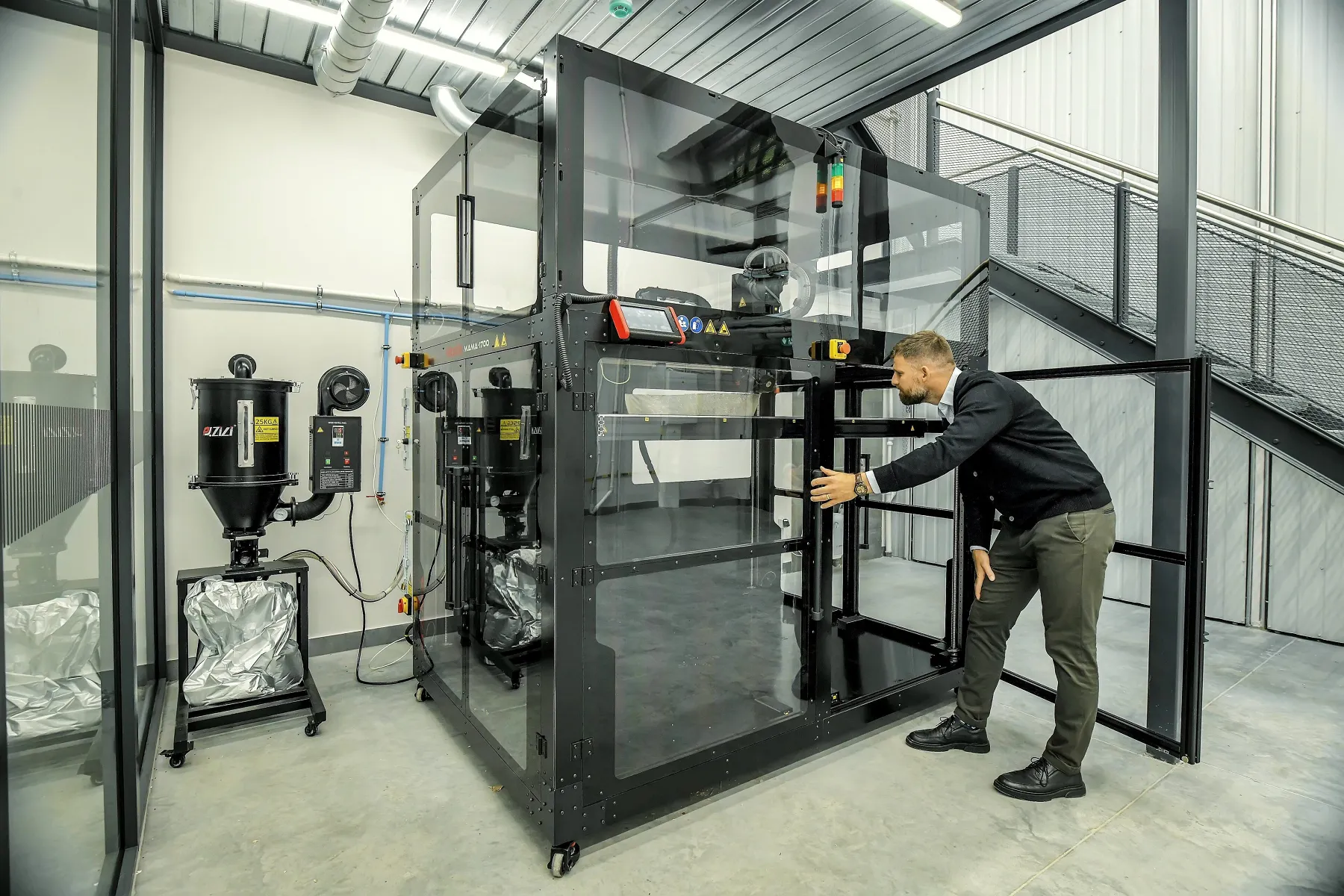
A competence centre was also established, representing one of the largest research infrastructure modernisations in the history of VILNIUS TECH and Kaunas University of Technology (KTU). State-of-the-art equipment will support high-level research and enhance collaboration with industry, providing advanced prototyping and testing capabilities. This will open pathways for developing expertise and innovative solutions beneficial to society and relevant to industry.
Total funding for this mission: €31.51 million.
Key areas of focus:
-
efficiency studies on green hydrogen use in the transport sector
-
climate-neutral solutions for construction: alternative concrete-like materials to reduce CO₂ emissions
-
climate-neutral road and urban surface research, mixture testing, and prototypes
-
noise-reducing barriers made from recycled plastic and tire rubber, based on acoustic insulation studies
-
development of advanced biopolymer materials for packaging
-
optimisation of wastewater and sludge treatment processes
-
smart functional materials for next-generation solar cells
VILNIUS TECH consortium members:
VILNIUS TECH; KTU; SG dujos Auto; Arginta; 3D Creative; Tilsta; Provectus redivivus; Kelių priežiūra; Soli Tek R&D; Nanoversa; Lithuanian Confederation of Industrialists; Sunrise Valley Science and Technology Park; Kaunas Science and Technology Park; Lithuanian Innovation Centre.
Safe and Inclusive e-Society
This mission is managed by a consortium led by Kaunas University of Technology (KTU). Its goal is to increase national-level cybersecurity resilience and reduce risks of personal data breaches, thereby strengthening Lithuania’s cybersecurity and promoting an inclusive digital society.
An Information and Communication Technology Competence Centre is being established, bringing together top experts and state-of-the-art infrastructure capable of processing massive data flows, providing high-level digital security, and supporting critical research.
Total funding for this mission: €24.16 million.
Key areas of focus:
-
smart, sensory, self-learning, and adaptive buildings and workplaces; enhanced IoT cybersecurity
-
cybersecurity research and technological development in the FinTech sector
-
a prototype sensor for identifying cyber threats in industrial infrastructure
-
a hybrid threat management system for public safety specialists, businesses, and educational institutions
-
a system that automatically detects and helps block disinformation spread by bots and trolls
-
cyber threat intelligence and automated analysis
-
identification and analysis of cyber threats targeting military systems (tanks, drones)
KTU consortium members:
KTU; Vilnius Tech; Mykolas Romeris University; Devslate Group; Novian Pro; Advisense; Getweb; Acrux Cyber Services; NRD Cyber Security; Baltic Amadeus; Lithuanian Cybercrime Research and Education Centre; Infobalt; Baltic Institute of Advanced Technology.
Project Timeline and Long-Term Impact
Project activities are planned until June 2026. However, the value created will continue long after. The three established competence centres will remain open to scientists and businesses, offering advanced infrastructure and expertise. They will operate as hubs for top professionals and will generate revenue through scientific research services, thus contributing further to the high value-added economy.
The planned project continuity period extends until 2029.