Stronglasas is one of the largest glass processing companies in the Baltic countries, which processes around 1.6 million square metres of raw glass per year. The company employs 245 people and sells its products in Scandinavia and the Baltic countries. The glass is tempered using 4 tempering furnaces that are highly power-intensive, resulting in an annual electricity consumption of around 10–11 million kWh.
According to the data of the company, the average monthly electricity bill until 2022 was around EUR 50–75 thousand, while in 2021, the yearly electricity bill was EUR 698 thousand. Following the energy crisis, the electricity costs of the company rose by more than 3.4 times to EUR 2.3 million in 2022, behind only the wage bill.
“We are one of the largest consumers of electricity in Southern Lithuania, which makes investments in renewable energy particularly relevant to us. We are delighted that the EU funds will help us to continue our own power generation projects,” says Andriejus Jakštas, CEO and one of the major shareholders of Stronglasas.
The power plant will be further expanded
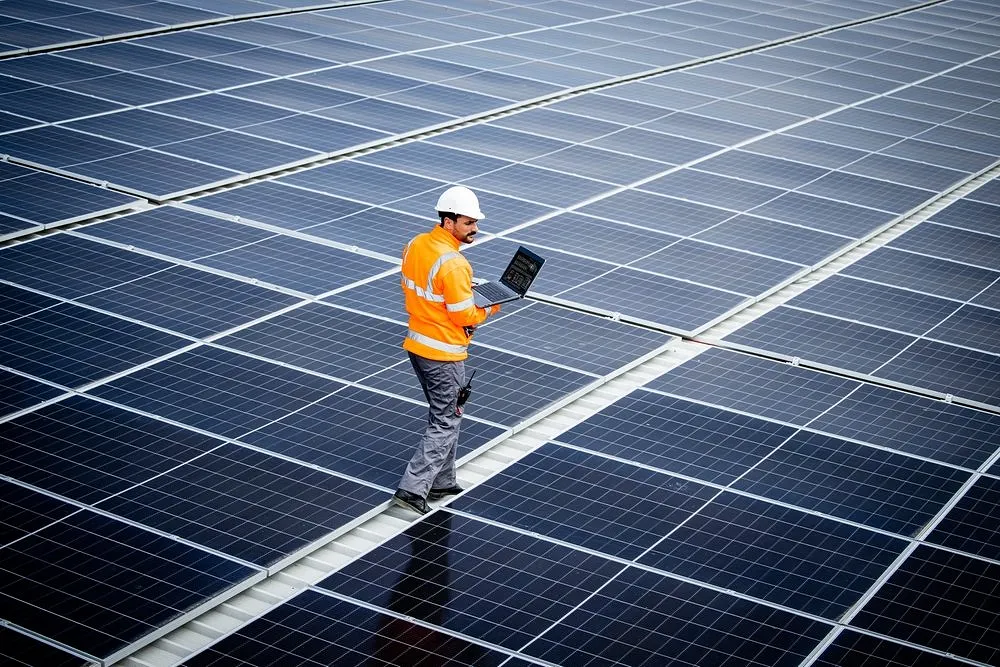
According to the CEO, Stronglasas completed its first 1 MW solar power plant project in 2020. The total value of the project was EUR 728 000, partly financed by EU funds – around EUR 327 000. The solar power plant, installed on the roof of the production premises, generates around 870 000 kWh of electricity per year, which covers around 8 per cent of the total electricity demand of the company.
“We have now acquired 3.7 hectares of land near the company with the aim of building a 2 MW solar park, and this project has also received EUR 300 000 of investment from EU funds. Once built, both power plants will generate about one third of our electricity needs, which will significantly reduce energy costs,” says Mr Jakštas.
In his opinion, state and EU programmes aimed at the introduction of renewable energy sources in companies are a catalyst for business, allowing the company to strengthen its competitiveness, enhance sustainability and add value. The company estimates that with an average electricity price of 15 cents per kWh on the market, they will get a return on investment in 9–10 years, with a shorter payback period if the price falls.
Preserving the environment and natural resources
At the end of July 2023, Biržai public limited company Siūlas also launched a project to build a solar power plant. The company employs around 300 people and its principal activity is manufacturing, producing linen yarn, linen cotton fabrics and clothing.
“Rising electricity prices have motivated the company to analyse modern solutions for energy production and saving, and to introduce technologies that are environmentally friendly and preserve natural resources. We are grateful to the auditors for the energy audit and the recommendations, which have led us to plan to install a solar power plant,” says Vidmantas Gražinys, Director of Siūlas.
In 2021, the company carried out an energy audit and decided to build a 499.73 kW solar power plant based on the recommendations. In spring this year, Siūlas submitted a project implementation plan in response to a call for EU investment. The company was awarded funding. Work has already started on the solar power plant. The total value of the project is EUR 338 000, of which around EUR 175 000 is investment from the European Regional Development Fund.
“We plan to generate up to 430 MWh of electricity per year, which will be about one third of the current annual electricity demand of the company. Renewable energy solutions will allow for significant savings and at the same time reduce our dependence on fossil fuels,” says Mr Gražinys. He added that this investment is not only important from an economic point of view, but also from a sustainability point of view, as it will help the company to reduce its greenhouse gas footprint by up to 94 tonnes of CO2 per year.
Interest is growing tremendously
The “RES for Industry” call launched at the beginning of 2023 attracted 265 unique project implementation plans, with Lithuanian industrial enterprises claiming a total of almost EUR 40 million in renewable energy investments, compared to the original target of EUR 10 million.
“The interest of Lithuanian companies in renewables is enormous. The call attracted three times as many applicants as the funds available. Taking into account the needs of business for more sustainable and more efficient electricity, we increased the funding, which allowed all the projects that were deemed eligible to receive investment,” said Aušrinė Armonaitė, Minister of the Economy and Innovation.
According to Diana Martinavičė, Head of the Business Promotion Division of the Innovation Agency, the funding for businesses was distributed in 3 rounds, two of which have already ended: “At the beginning of September, we received the good news of the third round of funding – all 226 projects have already been funded. The implementation contracts are now being signed.”
To strengthen the Lithuanian economy, the Ministry of the Economy and Innovation plans to launch calls for EUR 165.2 million by the end of 2023, the total investment amount being almost EUR 1 billion, of which EUR 165.2 million has been earmarked for the industrial transition towards a climate-neutral economy.
The current EU investment calls are available on the website of the Innovation Agency.