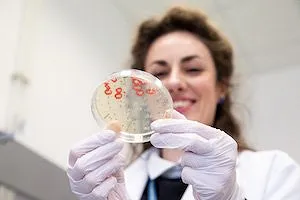
“We are developing genome editing tools, the “genetic scissors”, based on CRISPR-Cas systems. This is a targeted approach to DNA sequence modification that has revolutionised the entire field of genetic engineering. Previously long, expensive and complex processes have become cheaper, faster and more accurate thanks to the development of new tools. We help companies apply gene editing solutions to their operations to reduce the costs and risks of research and experimental development (R&D) and increase the likelihood of their business success,’ explained Karolina Makovskytė, Business Development Manager at Caszyme.
The Technology Is Widely Applicable
“CRISPR-Cas genome editing technology has already been effectively applied in the pharmaceutical and chemical industries, in the production of molecular reagents and in the development of biotechnology science. In medicine, several clinical trials are currently underway to develop therapies for genetic and oncological diseases,” said Ms Makovskytė.
The application of Cas proteins is constantly expanding. In the context of climate change, for example, this technology has become particularly relevant in agriculture.
“It is being used to increase the resistance of plants to various diseases and pests. It is also being used to develop plant varieties that are more resistant to rapidly changing climatic conditions. This helps produce higher yields and crops with higher nutritional value,” noted Ms Makovskytė.
In the future, she says, the development of new molecular tools and the improvement of existing ones will not only open up new opportunities to accelerate research in a wide range of fields, but will also provide the basis for a new scientific breakthrough.
The Investment Accelerated the Project's Implementation
“After submitting the project application, we received funding to carry out research and add Cas proteins with new properties to our database. This allowed us to accelerate the expansion of our existing database and increase our competitiveness on the market,” said Ms Makovskytė.
The search for and development of tools for CRISPR-Cas genome editing technology is a very important part of Caszyme's activities.
“With the completion of the project activities in October, we have been continuing to actively commercialise the solutions developed during the project and we do not intend to stop. To meet the market needs and global trends in technology development, we plan to continue expanding our company's services and expanding the database of molecular genome editing tools,” said Ms Makovskytė.
For the implementation of the project under the EU measure Experimentas, the Innovation Agency (formerly, Lithuanian Business Support Agency) granted UAB Caszyme €200,000 in funding. The total budget of the project was close to €300,000. One third of this amount was invested by the company itself.
Consistent Investment in Innovation
Over €310 million have already been invested in business research and experimental development in the 2014-2020 funding period, with 251 projects completed and 236 ongoing. The programme will result in a total of 864 innovative product prototypes.
“To further stimulate the supply of innovation, we launched the InoStartas call last week. Its main activities will enable researchers to participate in R&D projects in companies, launch pilot production of newly developed products and prepare them for the market. We are also planning to launch two more calls early next year: InoPažanga and InoBranda for the deployment of R&D innovations,” said Agnė Vaitkūnienė, Director of the Investment Management Department of the Innovation Agency.
InoStartas, InoPažanga and InoBranda are part of the 2022-2030 Economic Transformation and Competitiveness Development Programme managed by the Ministry of the Economy and Innovation of the Republic of Lithuania. The project activities are financed by the EU investment funds.
All calls are published on the website of Innovation Agency's funding instruments.