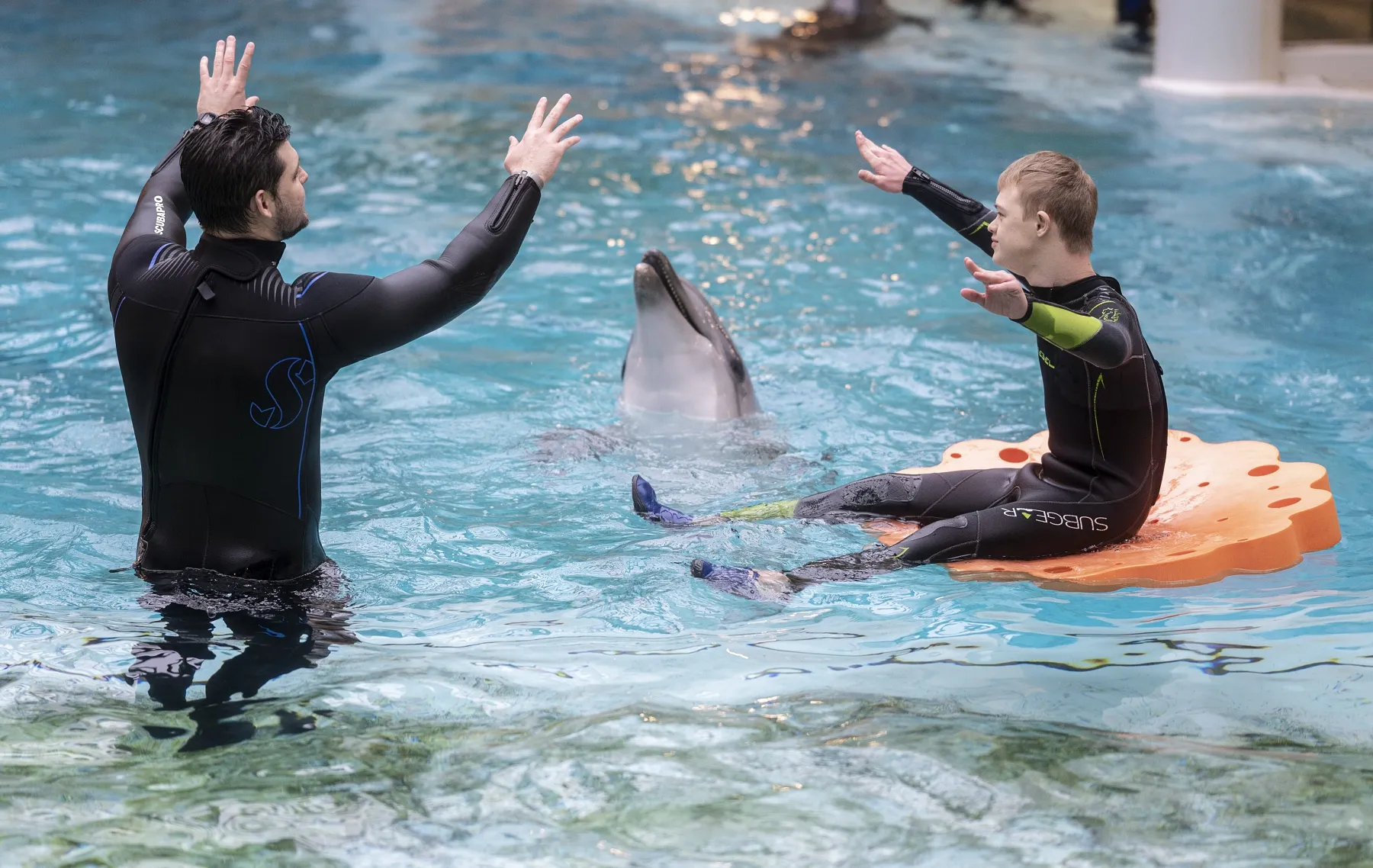
The project investigated and, based on objective data, developed a model of human mental health wellbeing that could be implemented not only in hospitals and mental health facilities, but also with the involvement of an animal, such as a dog, a horse or a dolphin. Using approved methodologies, as well as descriptions and regulations drawn up by professionals, psychosocial work can be carried out safely and integrated into the concept of holistic medicine. The latter is defined by the World Health Organisation as a concept of health that goes beyond the absence of disease to include a person’s participation in social life, the quality of life, the environment, mobility, quality nutrition and mental wellbeing.
“Our project has been guided by the general statistical norms showing a considerable increase in mental illnesses and, in particular, a growing number of children and young people with mental and behavioural disorders. Moreover, Lithuania still lacks the so-called biopsychosocial or holistic approach to people with disabilities, so we developed methodologies for the largest groups of patients who are subject to animal assisted therapy, i.e. people with mental and behavioural disorders and people with nervous system diseases. Our studies have involved children with autism spectrum disorders and cerebral palsy, as well as adults with multiple sclerosis and organic depression,” says Prof. Dr. Brigita Kreivinienė, Head of the Dolphin Assisted Therapy Department at the Lithuanian Sea Museum.
After the idea of the project of Animal Assisted Therapy Methodology and Animal Welfare was recognised as a health biotechnology innovation by the then Agency for Science, Innovation and Technology (now the Innovation Agency), the Ministry of the Economy and Innovation of the Republic of Lithuania and the then Lithuanian Business Support Agency (now the Innovation Agency) allocated EUR 769 000 from the EU Structural Funds programme within the framework of the “Pre-commercial procurement LT” measure for the project. The total value of the project amounted to EUR 895 000.
“Although animal assisted therapies have been applied around the world for years, their methodologies are often very different and not all of them are suitable for Lithuania. We developed the animal assisted therapy methodology at the same time as the political and legal regulatory changes were taking place in Lithuania. As a result, the research colleagues involved in the project studied the therapeutic impact that horses, dogs and dolphins had on patient groups and together we developed unique knowledge about how and to what extent therapy changes a person’s mental and physical state as well as social life,” says Ms Kreivinienė.
She points out that the findings of the project will undoubtedly serve as a basis for further research, and that the new methodology developed is closely linked to the process of animal assisted therapy and animal welfare regulation in Lithuania: “Therefore, the research and methodologies developed are not just a theoretical product, but can be applied in practice. Our task was to ensure that the client receives a service that responds to his or her sensitive needs, and the methodology developed will do just that.”
Not ignoring the animals involved in therapy
During the project, sessions with dolphins were filmed and their welfare was investigated by analysing their physiology and behavioural changes during therapy. The experts found that the animals’ behaviour was stable and positive, with no negative changes. To assess the physical condition of the dolphins, the researchers analysed the levels of the hormone cortisol, which is released during stress, the heart rate, the respiratory rate and the body temperature dynamics before and after the therapy session. The measurements were carried out using an innovative technique to measure the dolphins’ body temperature during the therapy process and to determine cortisol levels from saliva, urine and faeces.
“After evaluating the data collected, we concluded that the therapy sessions caused no stress to the dolphins. The therapy involved only clinically healthy animals over 3 years of age who had completed all tasks during the assessment. Dolphins learn to be therapists from a young age by swimming alongside their mother, and the trainers are trained by experienced staff from the Department of Animal Care of the Sea Museum. Training can take 6 months or more, and only people with a background in biology can become trainers. Therefore, a large group of both practitioners and scientists were involved in this research process,” says Ms Kreivinienė.
Inspiring outcomes
“The research results exceeded expectations in every subject group. People with organic depression and multiple sclerosis showed a significant improvement in their psychophysical condition, with reduced pain, better sleep, a greater willingness to engage in social life, improved concentration and, most importantly, increased positivity, willingness to seek opportunities, and optimism,” comments the professor.
She points out that the physical condition of the people who participated in the animal assisted therapy has also improved significantly, with increased stamina, activeness, balance, gait and coordination. Children with autism spectrum disorders and cerebral palsy showed significant improvements in all neurosensory domains: communication, self-expression, concentration, gait, balance, engagement in social activities, and expressive language. In addition, their emotional instability, general emotional tension, sensory irritability, and muscle tone were reduced and their perception of safety was enhanced.
Helping commercialise a prototype
The project of the Lithuanian Sea Museum was implemented under the “Pre-commercial procurement LT” call published by the Innovation Agency. This measure was unique in that the project activities involved scientific research and experimental development (R&D) by service providers to address a public problem and develop a solution that is unmatched on the market and that meets an existing need.
“The “Pre-commercial procurement LT” measure allowed the Sea Museum to achieve a near-final result with this project, i.e. to develop a methodology, to test and validate it under control conditions. Of course, the product is not yet ready for commercialisation, but the possibility to refine it and fully prepare it for the market has been foreseen in the new “Innovative procurement” service currently being developed by the Innovation Agency,” says Agnė Vaitkūnienė, Director of the Investment Management Department of the Innovation Agency.
To strengthen the Lithuanian economy, the Ministry of the Economy and Innovation plans to implement measures totalling almost EUR 1 billion by the end of 2023. Of this amount, EUR 365 million has been earmarked for business, innovation and investment.
All current and forthcoming calls with detailed descriptions and terms are available on the website of the Innovation Agency. The Innovation Agency also provides free advice on starting and growing a business and on choosing the right financing instruments.