The company Bagfactory manufactures bags. Though, some people may consider them as small things of daily use and low importance, but actually, it is the opposite. Changes in the small things we use every day lead to great changes, which require also innovative scientific solutions.
Pioneers in the world
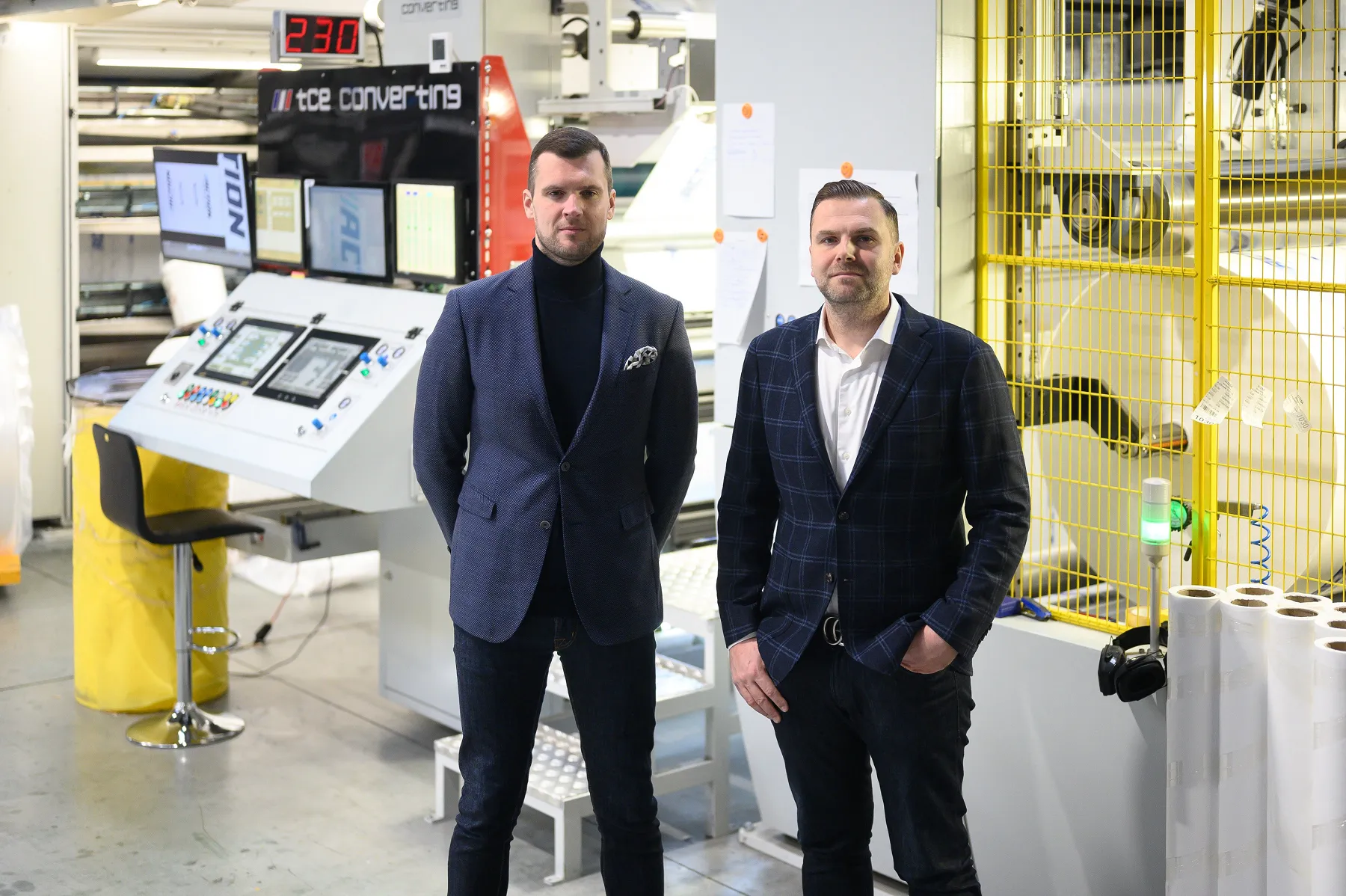
“We wanted to be the first in the world to produce a non-disposable non-woven bag from 100% recycled PET bottles. We realised that without external help we will not succeed, as our goal required technology that did not exist yet. We could not do without scientists’ help here. And we received help from people from Kaunas University of Technology (KUT), Professor K. Baršauskas Ultrasound Science Institute,” says Gvidas Krolis, who together with Marius Rumbinas founded Bagfactory company, speaking about one their latest projects.
Together with the KUT scientists, ultrasound material joining technology was developed for automatic production of non-woven bags. To implement this innovative project, the company submitted a project to the Innovation Agency seeking for European Union financing.
“The technology was developed, which because of its innovativeness not only enables the Lithuanian company to be the leader of the sector, but also deals with real problems, helps developing more sustainable production and cleaner environment. Despite its early stage, we can already see the potential benefits it will bring for society,” says Agnė Vaitkūnienė, Head of Investment Management Department of the Innovation Agency that financed the project.
The first ambition – moving production from Asia to Lithuania
The business of Krolis and Rumbinas was launched in 2006. It started from an export-import company in China, acting as intermediary between manufacturers in this country and clients from Central Europe and Nordic countries.
“At that time, retail chains used exclusively disposable plastic bags and hardly anybody thought about the need for their alternative. But we believed that the alternative was not only needed, but actually we could offer it. We were working on it, tried our best and managed to introduce in the region and offer a non-disposable bag model to retail chains.
However, we also saw that production in Asian countries cannot satisfy our needs – we had different approach to production, its environmental impact, product quality. So we started thinking about producing everything in Lithuania. But it was complicated, as labour in Asia is much cheaper. Only production automatization could help here, but at that time, no suitable solutions existed yet,” says Gvidas Krolis, Managing Director of Bagfactory.
But after some time, the entrepreneurs took the challenge and launched own production in Lithuania. It was an immense challenge – not only master knowledge of production processes but even bigger investments were needed.
'We started in the garage from the money borrowed from friends, relatives. It was very hard. We believed that our work has future. The time showed that we were right, but at the time when we started our production, nobody in the Baltic States needed our products yet', says Mr. Krolis.
'We are the patriots of Lithuania'
The first technological step of Bagfactory proved right – transfer of production from Asia to Lithuania was successful. When the time came for another technological step – development and adaptation of ultrasound technology for bag production from recycled bottles – we did not need to borrow from relatives and friends, as we received help from the Innovation Agency.
“The European Union is firmly moving towards circular economy, when efforts are made to renovate, repair every item, or to make a new product from recycled material. Minimised use of initial raw materials is pursued. Back in 2017, we declared that we want to make our production circular, for example, to supply non-disposable bags to retail chains, then collect the non-disposable bags that are no longer in use and to make new ones from them. Big quantities of PET bottles are thrown away in the world. To produce non-woven yarn from them and to use it for production of new non-disposable bags.
But it required immense investment. Recycling, then preparation of raw material from it are separate factory tasks with their own technologies. And its price may be tens of millions of euros. We hope we will have them one day. But we decided to start from technology development – from the possibility of automated and fast production of bags from recycled bottles. And we have it', says Mr. Krolis.
According to him, the company’s plans entail not only further development but even more joint projects with scientists.
“We travelled far from the garage. And we plan to travel even further. We are the patriots of Lithuania and believe we can make a product not inferior to a product made in any other Western country. We are not inferior. In packaging field, we can offer something that nobody else in the world can.
We work hard, move forward and do not intend to sop. Our goal is to be an important player on the global market,” points out the Managing Director of Bagfactory speaking about the company’s ambitions.